
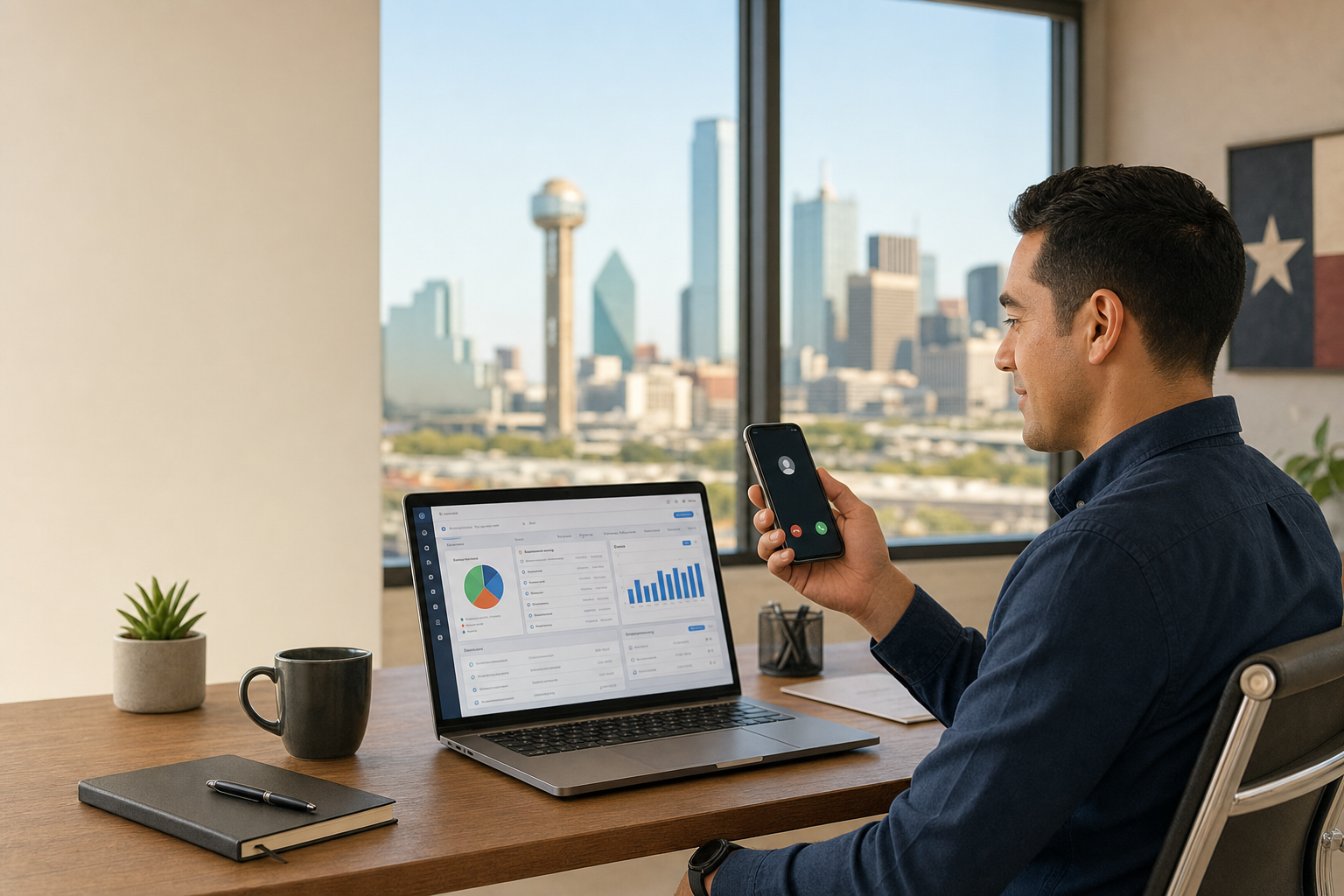
AI for small business in Dallas looks like phone answering, lead follow-up, and scheduling wired into tools owners already pay for. According to Thryv's 2025 SMB survey, 55% of US small businesses now use AI, up 41% year over year, with firms of 10–100 employees at 68%. DFW tracks that curve. The experiment phase is over. Owners want revenue workflows, not another chatbot on the homepage.
I run DialWise AI and TrainR out of the Dallas area. I have spent 13 years in sales and marketing and the last two shipping AI workflows for Texas SMBs. Military intelligence and QA work taught me to document what actually happens, not what the slide deck says. This piece is what I see in the field as of June 2026.
How Are Small Businesses in Dallas Using AI Right Now?
Most DFW owners started with drafting. Emails, proposals, social posts in ChatGPT or Copilot. That phase lasted about six months. The shift in 2026 is operational AI tied to money.
The top four patterns I deploy for local clients:
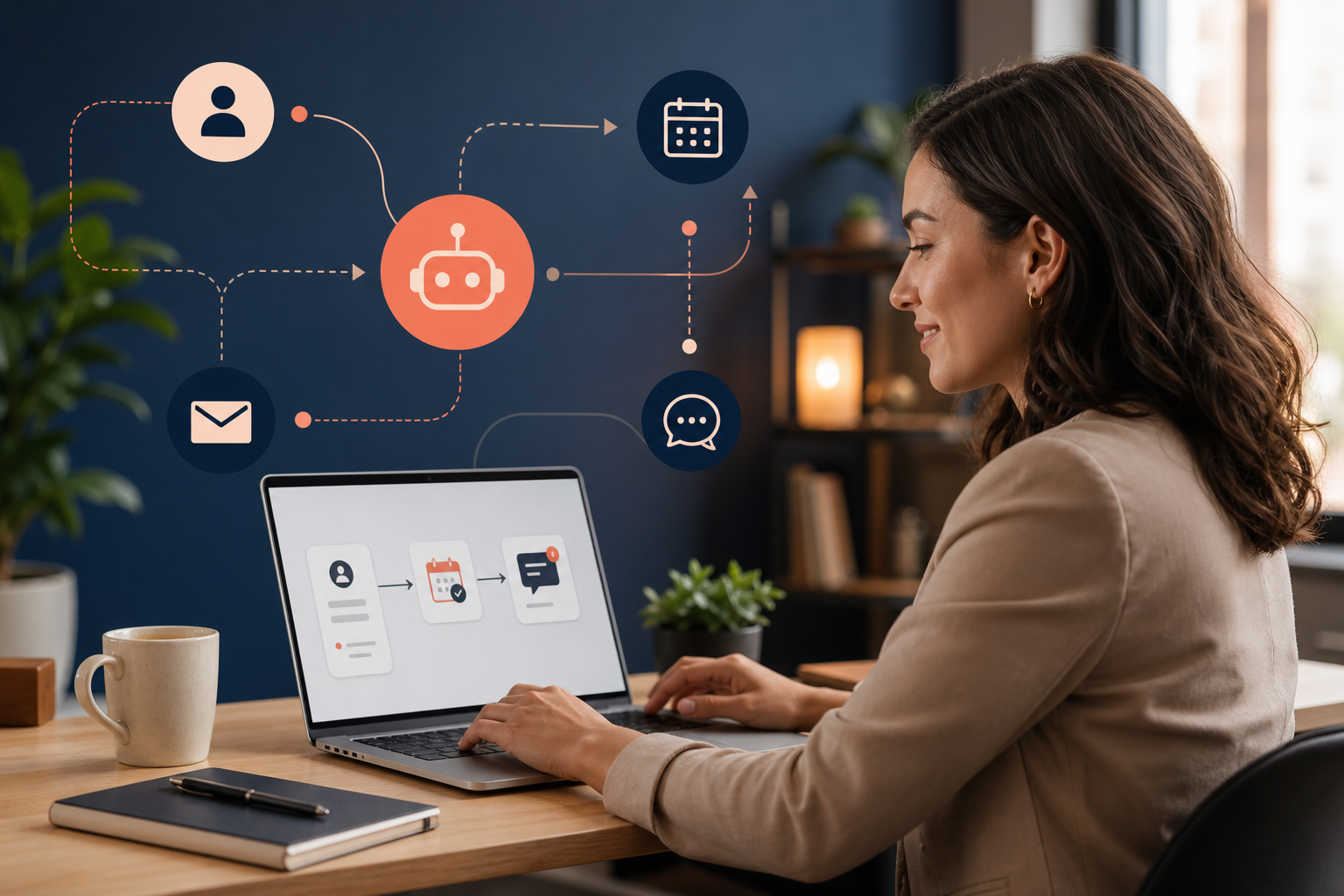
- Speed-to-lead. Form submit triggers SMS, CRM entry, and a booked call within minutes. Service companies in Plano and Frisco live on this.
- After-hours voice. AI answers when the office is closed, qualifies the job, checks zip code, books the slot. Contractors lose fewer emergency calls to voicemail.
- Appointment booking. Calendar sync, reminders, reschedules without phone tag. Common with med spas, legal intake, and home services.
- Support triage. Chat or email bots handle FAQs and collect details before a human steps in. Warranty questions, order status, scheduling changes.
What I rarely see work locally: custom model training, enterprise RPA, or AI policy committees at a 15-person shop. Those are different budgets. Dallas Fort Worth small business owners want something live in weeks that shows up on the P&L.
Is AI Worth It for a Dallas Small Business?
Yes when you tie it to a number you already track. Missed calls recovered. Response time under five minutes. No-shows down. One extra booked job a month often covers the stack.
On DialWise deployments I have measured missed-call recovery above 70% for local service companies. A Richardson HVAC owner went from returning voicemails the next morning to booking estimates on the first ring. That is ROI you can explain to a skeptical partner in one sentence.
It fails when you buy for novelty. A floating website bot with no CRM backend is a monthly bill and zero pipeline. Run the math on average job value and current response time. If slow follow-up costs you even one deal a month, local AI adoption is already cheaper than doing nothing.
National data backs the local picture. Thryv is Dallas-based and surveyed SMBs nationwide in 2025. The 55% adoption rate and 41% YoY jump are not Silicon Valley startups. They are plumbers, agencies, and professional services firms your size.
What AI Use Cases Actually Stick for Texas SMBs?
Stickiness means the owner still runs it six months later. These three hold up across industries I work with in DFW.
Home services and contractors
Voice AI plus scheduling. High call volume, after-hours demand, clear service areas. The workflow is repeatable. Owners see booked jobs, not abstract productivity scores.
B2B shops with inbound leads
CRM-connected follow-up. A lead hits the site, gets scored, routed to the right rep, and nudged if nobody replies. AI drafts the touch. Humans approve the first template, then automation runs.
Professional services with calendars
Intake and booking. Med spas, consultants, therapists. AI handles slot offers and reminders. Staff handles the visit.
What drops off: content-only use with no operational hook, internal chatbots nobody asked for, and automations built before anyone mapped the real process. I still audit workflows before writing logic. Broken input produces broken output at machine speed. See my ranked build list in AI automation for small business in 2026 for what to prioritize after the basics are clean.
How Does Dallas AI Adoption Compare to National SMB Trends?
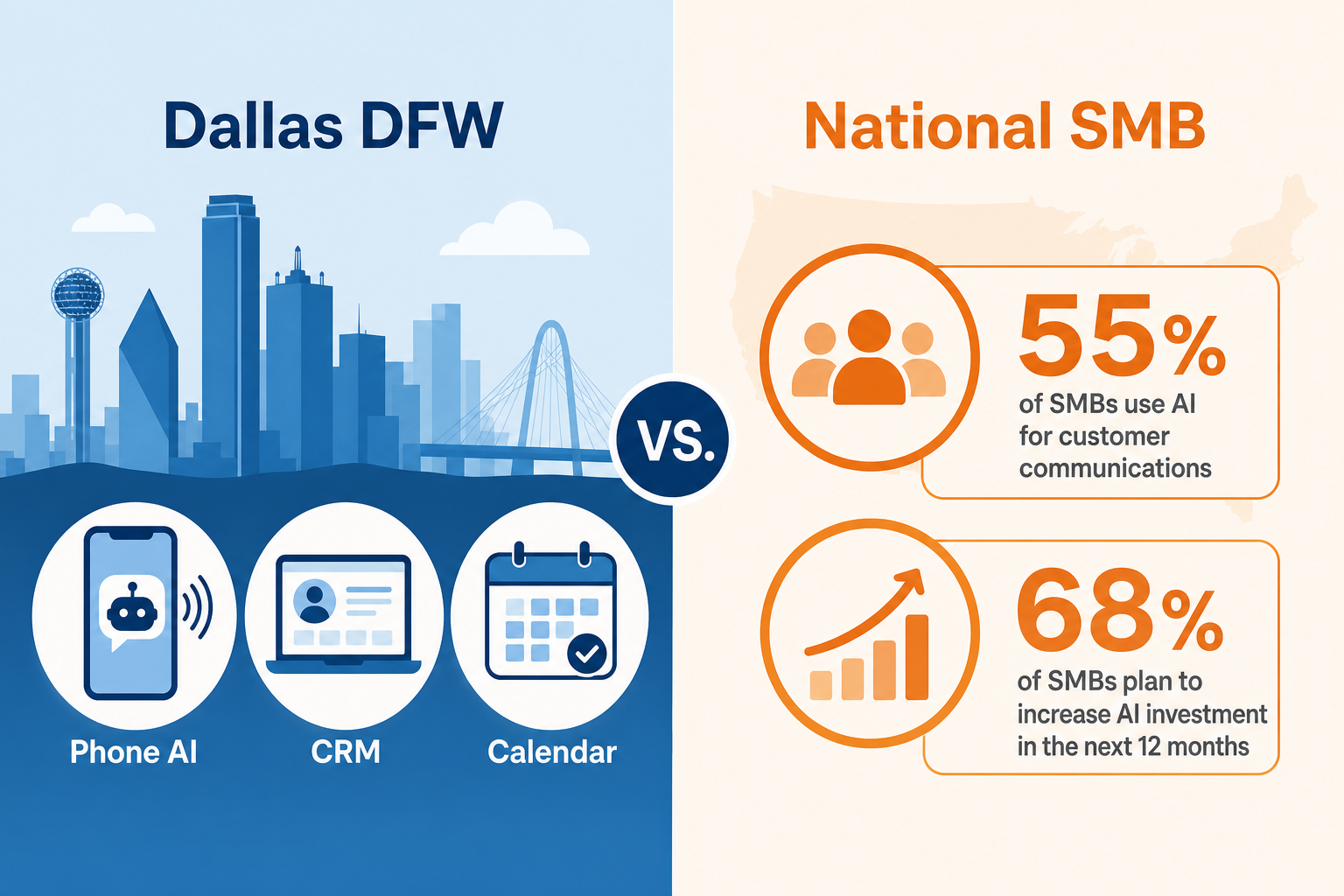
Dallas is not an outlier market. It is a dense SMB market with the same tools and the same Thryv-shaped adoption curve. Use this table when you are deciding where to invest first.
| Adoption stage | What it looks like | Typical DFW profile | ROI signal |
|---|---|---|---|
| Drafting only | ChatGPT for emails and posts | Solo owners, early curiosity | Time saved, hard to measure dollars |
| Connected workflows | CRM, calendar, SMS automation | 10–50 employee service firms | Response time, booked calls |
| Voice + operations | AI phone, booking, follow-up stack | Contractors, high call volume | Recovered missed calls, jobs booked |
| Guided build | Consultant-mapped custom flows | Multi-location, compliance needs | Hours removed from weekly ops |
Firms in the 10–100 employee band nationally hit 68% AI usage per Thryv. My DFW client base skews there. The gap is not access to tools. It is prioritization and someone who has shipped the same flow before.
I am not writing about national enterprise trends or generic global predictions. This is local AI adoption for owners who need a decision this quarter.
Who Helps Small Businesses with AI in Dallas?
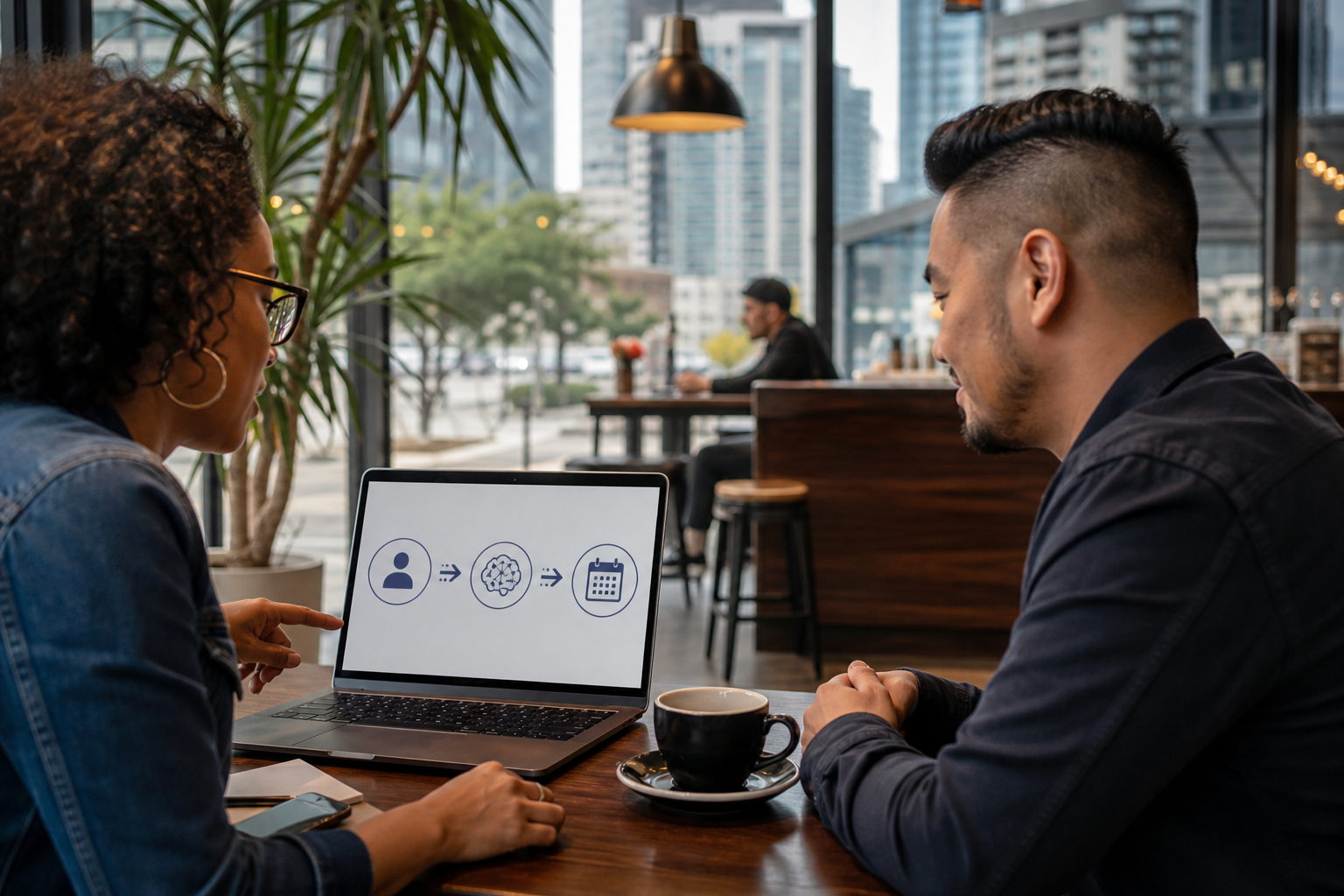
You have four realistic paths.
- DIY no-code. Zapier, Make, native CRM automations. Fine for one or two simple flows if you have time.
- Vertical SaaS. Your industry platform added AI features. Use them if they match your process.
- Local agencies. Marketing shops adding AI retainers. Watch for strategy decks without integration depth.
- AI integrator. Someone who maps your process, builds the stack, and hands you metrics. That is the lane I work in.
I am Etai Fishler, based in the Dallas area. I build AI solutions that fit humans instead of replacing them. DialWise handles voice. TrainR handles training workflows. For everything else I scope through AI automation services for local businesses: discovery, build, test, handoff with clear ROI targets.
The question is not whether you can learn the tools. You can. The question is whether six Saturdays of trial and error costs more than shipping in three weeks with someone who has done it forty times. For most Texas SMBs I talk to, speed is the return.
If you are a Dallas business owner, grab a coffee-length AI strategy call. I will tell you which two workflows are worth building first and which ones to ignore until next year. Book a free 20-minute audit. No pitch deck. Just a ranked plan tied to your numbers.
FAQ: AI for Small Business in Dallas
How are small businesses in Dallas using AI?
Most are past drafting-only use. The wins I see locally are speed-to-lead, after-hours voice answering, appointment booking, and support triage connected to CRM and calendar tools. According to Thryv's 2025 data, 55% of US SMBs use AI, with 10–100 employee firms at 68%.
Is AI worth it for a Dallas small business?
It is worth it when one recovered lead or one saved hour per week pays the software bill. Run your average job value against current response time. If slow follow-up costs you even one deal a month, automation is cheaper than the status quo.
Who helps small businesses with AI in Dallas?
You can DIY on no-code platforms, use vertical SaaS features, hire a local agency, or work with an AI integrator who maps your process and builds the stack. I work in that last lane for DFW and Texas SMBs through DialWise, TrainR, and custom automation projects.
What is the best first AI project for a Texas SMB?
Instant lead response plus booking delivers the fastest payback for most local service businesses. Voice AI is next if phone volume is high. Save custom agents until simpler flows are stable and measured.
How does Dallas compare to national AI adoption?
Dallas tracks national SMB trends closely. Thryv, a Dallas-based company, reported 55% SMB AI usage in 2025, up 41% year over year. DFW owners face the same tool choices. The differentiator is execution speed, not market uniqueness.